

As a proud owner of a snake plant, I’ve learned a thing or two about what makes these succulents thrive. One fundamental aspect is the soil mixture. So, what is the best soil for Snake Plant?



Snake plants are susceptible to root rot and prefer a well-draining soil mix. When you notice your snake plant leaves turning pale or yellow, that’s a sign the soil is too dense and not draining properly.
Many might opt for a plastic pot, but a terracotta pot is better for snake plants. It offers the perfect amount of drainage, essential for preventing root rot.
Commercial premium potting mixes made for cacti and succulents are a great choice, but you can also create your soil mixture.
Key Takeaways
- Snake plants require aerated or well-draining soil to thrive
- Soil nutrition is also crucial, so use manure or compost when planting snake plants.
- Ensure your fertilizer of choice has a balanced nitrogen, phosphorus, and potassium content.
Our Recommendations on the Best Soil for Snake Plants
There are several excellent snake plant soil choices out there. Some top brands that stand out include Professional Snake Plant Soil, Perfect Plants Organic Snake Plant Soil, and rePotme Snake Plant Soil.
Each offers a unique blend of ingredients tailored to the needs of snake plants. Let’s dig into a more detailed review of these soil mixes.
Professional Snake Plant Soil by Leaves and Soul
What we like
What we don’t like
One of the highlights of this soil mix is its large 2.2 quarts packaging. This quantity is sufficient for most snake plant owners, reducing the need for frequent purchases.
I have used this premium soil on my Snake Plants and can recommend it. Additionally, the quality of the ingredients ensures your snake plant receives the right nutrients for optimal growth.
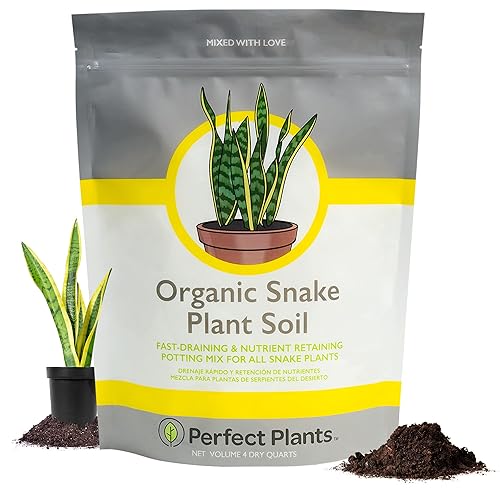
Perfect Plants Organic Snake Plant Soil
What we like
What we don’t like
As a snake plant owner, I know the importance of using the right Perfect Plants Organic Snake Plant Soil for my plants.
Snake plants are succulent plants and are prone to root rot. Therefore, a well-draining soil mix is essential. If you’ve ever noticed your snake plant leaves turning yellow, it’s a clear sign that the soil isn’t well aerated and isn’t draining properly.
I’ve found that the Perfect Plants Organic Snake Plant Soil is an excellent choice for snake plants, and I recommend this premium soil.
rePotme Snake Plant Soil Imperial Houseplant Potting Soil Mix
What we like
What we don’t like
Another excellent choice for snake plant soil is the rePotme Snake Plant Soil Imperial Houseplant Potting Soil Mix.
This succulent soil mix is hand-made and includes tiny pieces of bark, pumice, stalite, and diatomaceous earth. These ingredients provide this mix with good drainage, making it an ideal choice for snake plants.
GARDENERA Premium Snake Plant Potting Soil Mix
What we like
What we don’t like
I have observed excellent plant health and growth results using this potting soil mix. My snake plants have exhibited healthy, colorful foliage and have even produced new shoots and healthy roots.
The well-aerated, well-drained medium has prevented root rot, which is common in snake plants grown in waterlogged soil.
The pH balance of this soil mix is generally suitable for snake plants, falling within the slightly acidic to neutral range. This is crucial for the plant’s nutrient absorption and overall health.
This is another of my favorite Snake Plant soil mixes and is highly recommended.
Soil Sunrise Snake Plant Potting Soil Mix
What we like
What we don’t like
The Soil Sunrise Snake Plant Potting Soil Mix is another option to consider. However, like any soil mix, it might not fit all snake plants perfectly. Some snake plants might prefer a different composition or texture.
What kind of soil for snake plant? I recommend this premium potting soil mix, but I would advise monitoring your plant’s response and adjusting the soil mix as needed, as this would be essential to your plant’s well-being.
What to Consider When Choosing the Best Soil for Snake Plants
Not every snake plant soil is a one-size-fits-all type. You must remember that there are several plant species, and what works for one may not work for another.
So, when choosing the best soil for your snake plants, there are a few key factors to consider.
Drainage Ability
A snake plant prefers light, loamy soil that drains well. Like all succulents, snake plants cannot tolerate waterlogged soils. They need a soil mix that allows water to pass quickly without becoming compacted.
pH Balance
The next thing to consider is the soil’s pH balance. The soil should have a pH of 5 to 7. This range is slightly acidic, which is ideal for snake plants.
It helps ensure the plant can easily absorb nutrients from the soil. Be aware of alkaline soils, which make it difficult for plants to access needed nutrients.
Type of Soil
While you may be tempted to use soil from an outdoor garden bed or yard, it’s best to avoid using it.
This soil can become compacted or contain insects or bacteria that could harm your snake plants. Instead, choose a sterile commercial potting soil free of pests and disease.
Soil Texture
Lastly, consider the soil texture. The best soil for snake plants should be loose and airy. This allows good oxygenation of the plant’s roots, helping your snake plant grow healthy and thrive. The soil should not cling to the roots and suffocate the plants before they can grow.

Frequently Asked Questions (FAQs) on The Best Soil for Snake Plants
Q: What is the best soil mix for snake plants?
A: The best soil for snake plants is a fast-draining, slightly acidic mix. This means it should register between 5 and 7 on the pH scale. A perfect blend would include peat moss, perlite, and vermiculite. This mix is loose and airy, allowing for good drainage and oxygenation of the snake plant’s roots.
Q: Is sandy soil good for snake plants?
A: Sandy soil can be beneficial for snake plants. These plants prefer a soil mix that drains quickly to avoid root rot. Sandy soil, much like the succulent and cactus mix, tends to be well-drained and aerated, helping to keep the snake plant’s roots dry. Mix in worm and organic compost to ensure the snake plant receives essential nutrients. This combination helps create an ideal environment for snake plant growth.
Q: What helps snake plants grow faster?
A: Several factors contribute to the rapid growth of snake plants. Ensuring they’re planted in well-drained soil, such as a succulent and cactus mix, is crucial. This prevents root rot, a common problem in snake plants. Also, use a pot with drainage holes to let excess water drain out. You might also consider using a terracotta pot, as it tends to provide the perfect amount of drainage.
Q: What kind of soil is good for snake plants?
A: Snake plants thrive in well-draining, loose, and aerated soil. A good soil mix for snake plants typically includes potting soil, perlite, and coarse sand. This type of soil allows proper drainage and prevents roots from sitting in water, which can cause rot. Additionally, adding organic matter, such as peat moss, can help retain moisture without causing the soil to become waterlogged.
Final Thoughts on The Best Soil for Snake Plant
It’s important to remember that healthy snake plants require unique care, like any other plant species. They are susceptible to root rot, signaling the need for a well-draining soil mix.
Choose a pot with enough drainage holes to ensure excess water drains properly.
When choosing a snake plant soil type, use commercial premium potting mixes designed for cacti and succulents or make your own mix. While a plastic pot will do, a terracotta pot often provides better drainage.
Many excellent snake plant soils are available, but choosing one that meets your needs is crucial. [1]
Remember, air circulation is a key factor in maintaining a healthy snake plant, so ensure your potting soil for the snake plant is a soil mix that allows for this.
Further Recommendations:
- How to Stop Ants Nesting in Plant Pots
- What Plants Don’t Like Epsom Salt? Garden Tips for Using Indoors and Outdoors
- How to Build a Patio Cover: A Comprehensive Guide
- Houseplant Happiness! A Guide on How to Clean Plant Leaves Effectively
- Maximizing Greenery: How to Arrange Plants in Your Living Room for Stylish Decor



Leave a Reply