
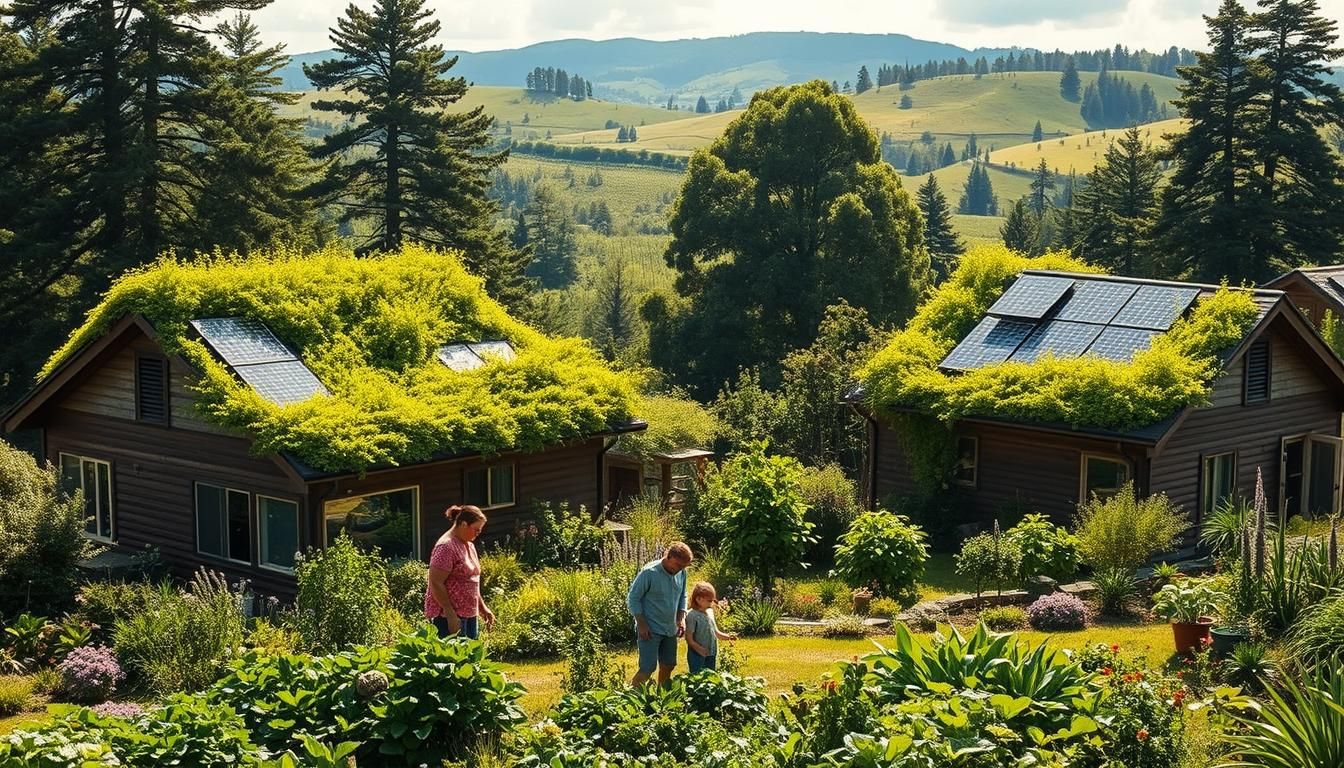
Are you ready to make your home eco-friendly? It’s not just a trend. Sustainable homes offer a new way to live that’s comfortable, stylish, and environmentally friendly.
I’m passionate about green building. Sustainable homes are more than just cutting down carbon emissions. They’re about living in harmony with nature. Choosing eco-friendly housing is a wise decision for those who care about the environment.
In this guide, we’ll dive into the world of sustainable homes. We’ll explore new designs, advanced technologies, and simple ways to make your home more environmentally friendly.
Key Takeaways
- Sustainable homes combine environmental responsibility with modern design.
- Green building techniques can significantly reduce energy costs.
- Eco-friendly housing improves both personal and ecological well-being.
- Sustainable design is accessible to homeowners at various budget levels.
- Technology plays a crucial role in creating energy-efficient living spaces.
What Are Sustainable Homes?
The world is facing significant environmental challenges. Sustainable homes are a key solution to reducing our carbon footprint. They represent a new approach to building environmentally friendly homes.
Sustainable homes are designed to be eco-friendly and comfortable. They use smart technologies and green principles. This changes how we see homes.
Defining Sustainable Living Spaces
A sustainable home is more than a building. It’s a way to live responsibly. These homes have essential features:
- They use less energy.
- They make less waste.
- They use renewable resources.
- They are designed with the environment in mind.
Core Features of Sustainable Homes
Sustainable homes have special features that make them stand out:
| Feature | Environmental Benefit |
|---|---|
| Solar Panel Integration | Renewable energy generation |
| High-Performance Insulation | Reduced energy consumption |
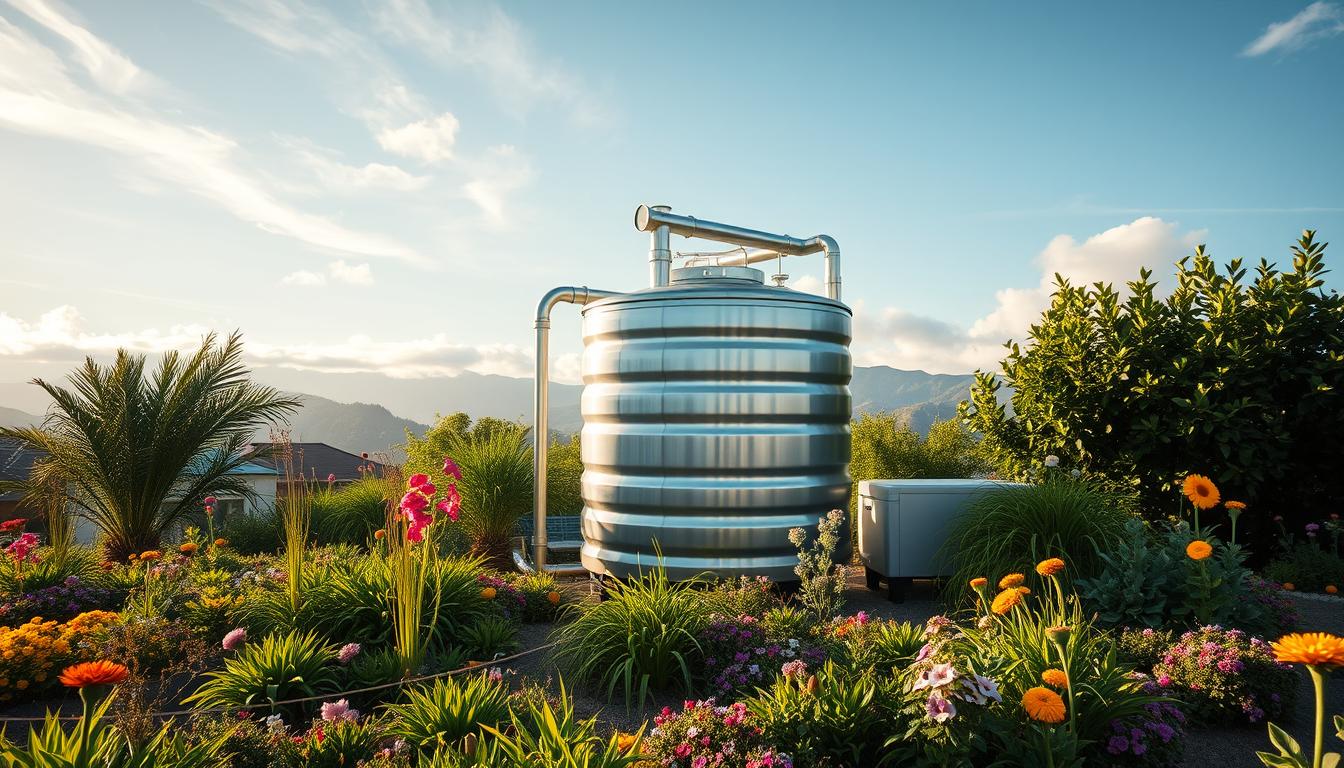
| Rainwater Harvesting Systems | Water conservation |
| Recycled Building Materials | Minimized environmental impact |
“Sustainable homes are not just a trend, but a necessary evolution in how we approach residential design and living.” – Environmental Design Institute
Sustainable homes show that we can live comfortably and responsibly. They are a big step towards a greener future.
Benefits of Living in a Sustainable Home
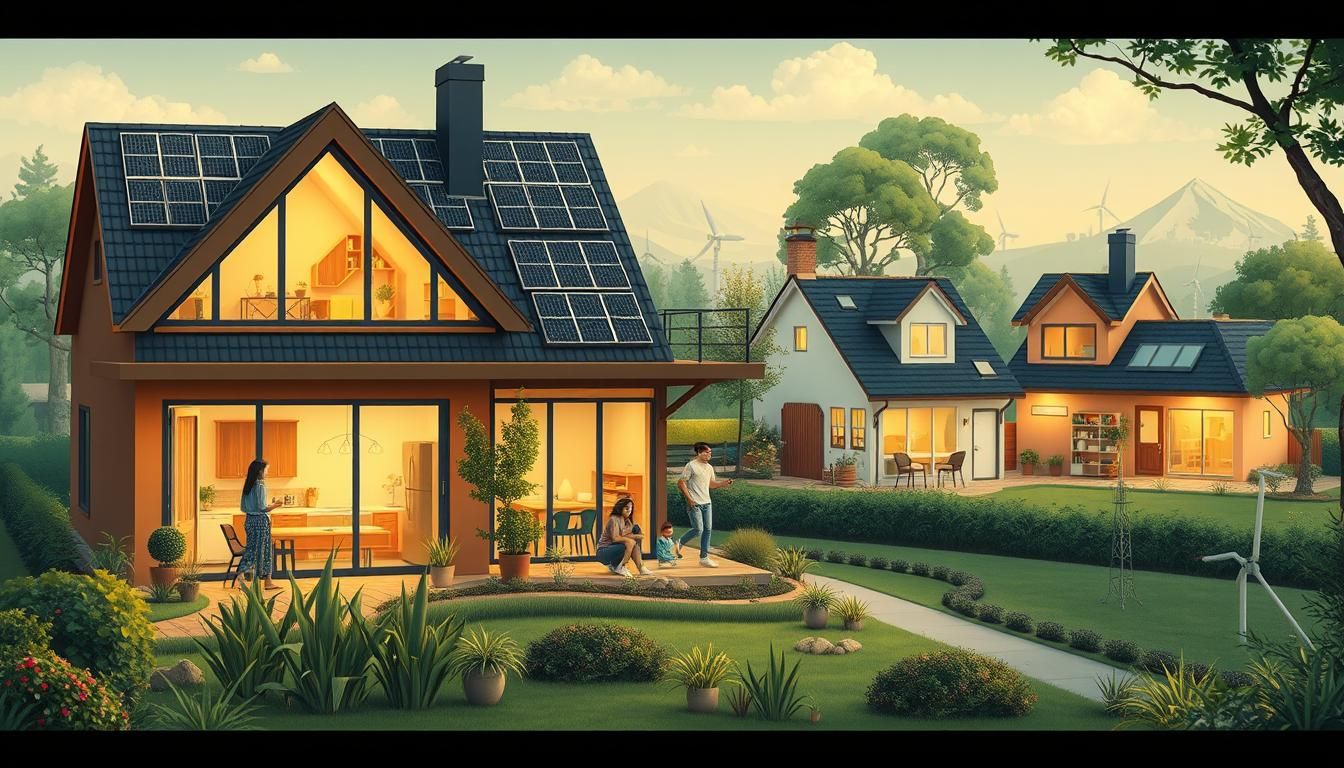
Sustainable homes are a new way to live that’s better than regular houses. They utilize environmentally friendly materials and strive for zero emissions. This makes them ideal for both homeowners and the planet.
Environmental Impact
Living in a sustainable home significantly reduces your carbon footprint. These homes are designed to be environmentally friendly. They use green materials and save energy, which lowers emissions.
- Reduced carbon emissions.
- Lower energy consumption.
- Minimal waste generation.
- Conservation of natural resources.
Cost Savings Over Time
Initially, sustainable homes may be more expensive. But they save money in the long run. They use less energy, which means lower bills.
| Expense Category | Traditional Home | Sustainable Home | Annual Savings |
|---|---|---|---|
| Energy Costs | $2,200 | $600 | $1,600 |
| Water Utilities | $700 | $300 | $400 |
| Maintenance | $1,500 | $800 | $700 |
Studies show that homeowners can save approximately $2,700 per year by opting for sustainable homes. These savings add up, making green homes smart for your wallet and the planet.
Pro Tip: Sustainable living isn’t just a trend, it’s a strategic approach to modern homeownership.
Key Elements of Sustainable Design
Creating an environmentally conscious design is more than looks. It’s about making spaces that work well with our planet. I’ve learned a great deal about how climate-resilient architecture influences our way of living and interacting with our surroundings.
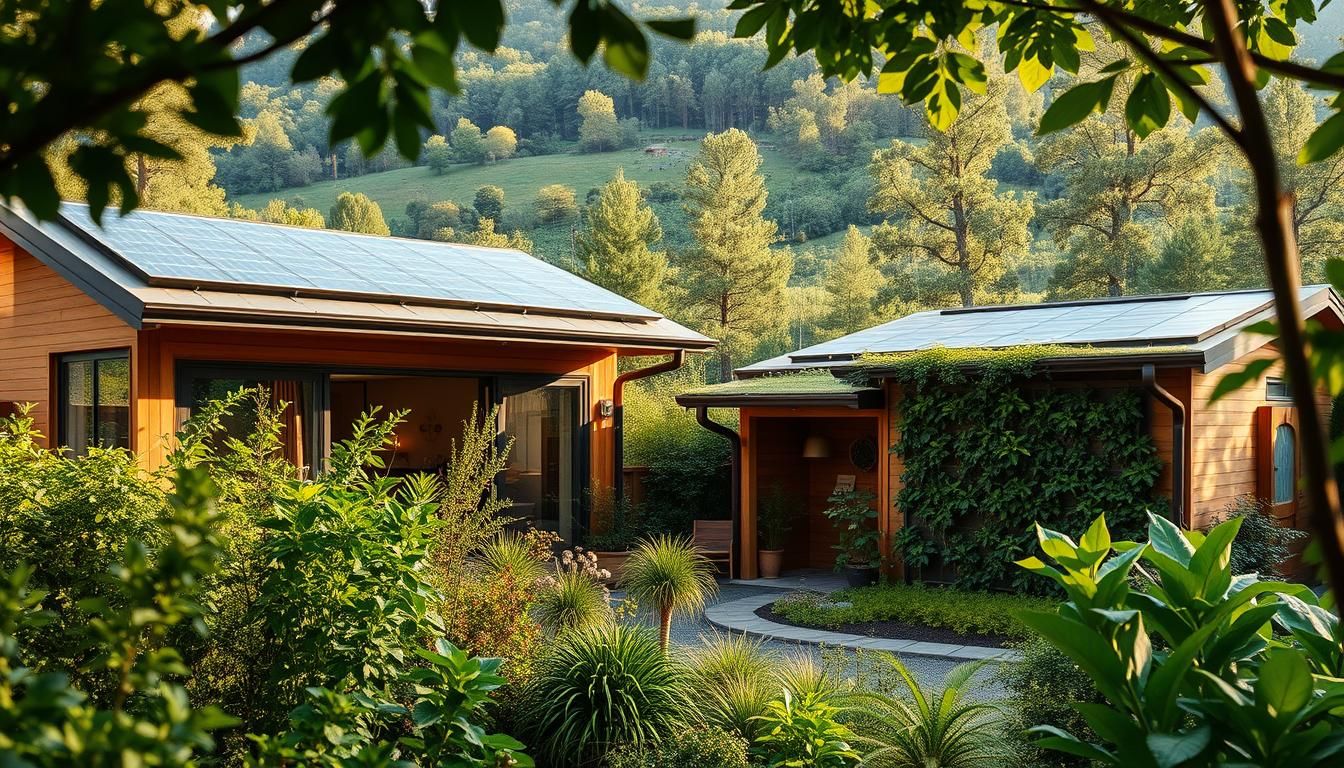
Sustainable design is a comprehensive approach to building and living in spaces. It aims to reduce environmental harm while maintaining efficiency and comfort.
Intelligent Energy Efficiency Strategies
Energy efficiency is key in environmentally conscious design. I’ve found several important strategies to cut down a home’s carbon footprint:
- Advanced insulation techniques.
- Strategic window placement for natural lighting.
- High-performance solar panel integration.
- Smart home energy management systems.
“Design is not just what it looks like and feels like. Design is how it works.” – Steve Jobs
Innovative Water Conservation Methods
Climate-resilient architecture needs careful water management. My research shows several new ways to use less water:
- Rainwater harvesting systems.
- Greywater recycling technologies.
- Drought-resistant landscaping.
- Low-flow fixture installations.
By applying these design principles, homeowners can create spaces that are not only visually appealing but also sustainable and resilient in the face of environmental challenges.
Popular Sustainable Building Materials
Green building has transformed the way we construct homes and design spaces. It uses renewable materials that are good for the planet and look great. These materials provide innovative solutions for creating living spaces that are both eco-friendly and visually appealing.
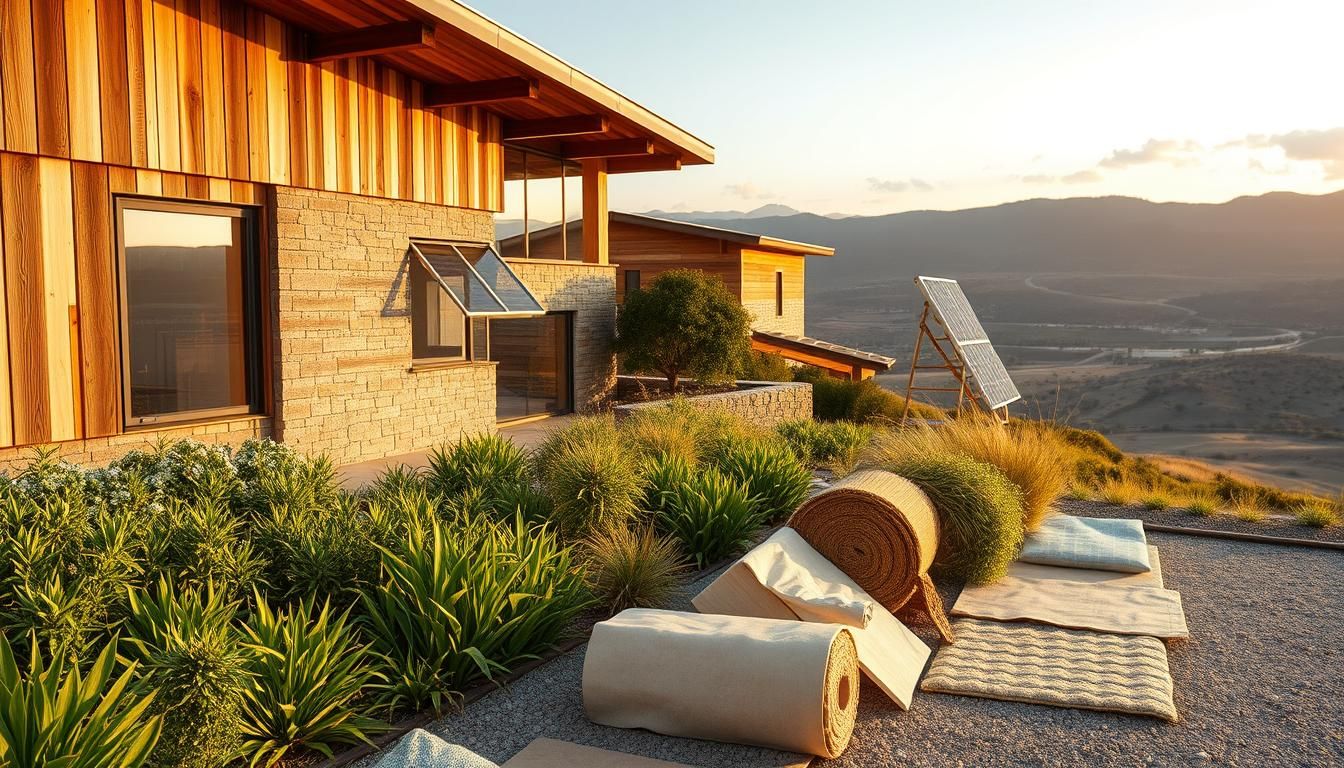
In sustainable construction, certain materials truly stand out. They are not only beneficial for the environment but also create spaces that are both beautiful and functional. I’ve explored various options that help mitigate environmental harm while building homes that are both lovely and practical.
Bamboo: Nature’s Wonder Material
Bamboo is a big hit in the green building industry. It’s incredible because:
- Grows fast (up to 3 feet per day).
- It is stronger than many other building materials.
- It is naturally resistant to pests.
- It can be used for flooring, furniture, and a variety of other purposes.
Reclaimed Wood: Giving Materials a Second Life
Reclaimed wood adds character and sustainability to homes, enhancing their aesthetic appeal and environmental impact. It comes from old buildings, giving us:
- A way to use less new wood.
- Unique, beautiful design pieces.
- A chance to keep history alive.
- Less waste in building.
Recycled Metal and Glass: Innovative Sustainable Solutions
| Material | Benefits | Common Uses |
|---|---|---|
| Recycled Metal | Reduces mining impact | Roofing, structural elements |
| Recycled Glass | Reduces landfill waste | Countertops, tiles, decorative elements |
“Sustainable materials aren’t just good for the planet, they’re a testament to human creativity and innovation.” – Architecture Design Magazine
My exploration of green building has shown me that sustainable materials are more than eco-friendly. They show our commitment to design that cares for the planet and creates spaces that are both beautiful and useful.
Energy Sources for Sustainable Homes
Creating a sustainable home means changing how we use energy. Today, people are using renewable materials and new tech to cut emissions to zero. The goal is to use smart, clean energy that’s good for the planet and keeps us comfortable.
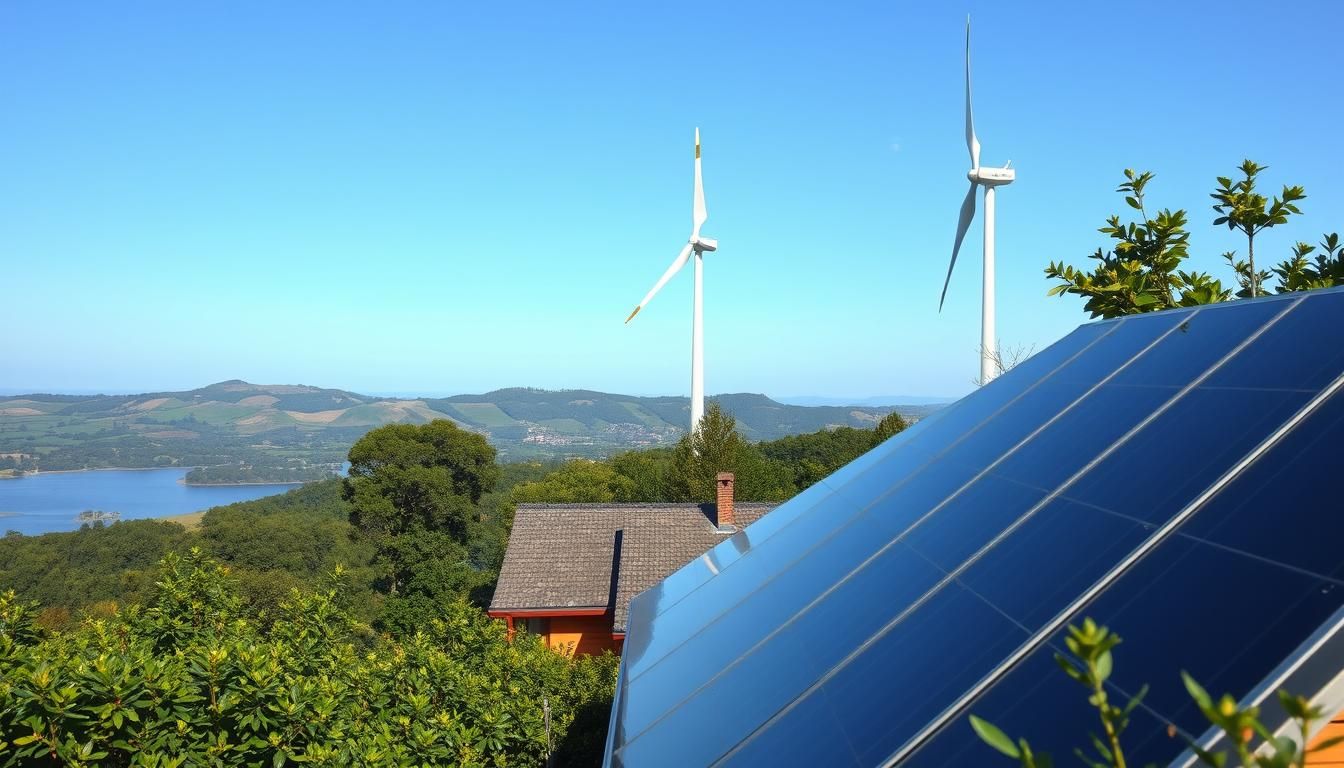
Choosing renewable energy is a smart move for both the planet and your wallet. Let’s examine the top energy sources for making your home more environmentally friendly.
Solar Power Options
Solar energy is now more accessible for homeowners to utilize. There are many new solar options:
- Photovoltaic roof tiles that look like regular roofing
- Ground-mounted solar panels for big yards
- Portable solar generators for extra power
It’s wise to consult with local solar experts to find the best solar solution for your home. Many places offer tax breaks that help reduce the cost of solar energy.
Wind Energy Possibilities
Wind energy is another excellent choice, though it gets less attention. Small wind turbines can complement solar energy well in areas with steady winds.
There are many sizes and types of wind turbines for homes. Vertical-axis turbines are great for cities and suburbs because they’re smaller.
The key to successful renewable energy is knowing your local conditions and energy needs.
Using these energy sources can significantly reduce your home’s carbon footprint. You’ll save money on your bills, and your home’s value will increase.
Smart Home Technology and Sustainability
Smart home technology is transforming the way we design and inhabit homes. It lets us control our energy use and help the planet. Now, we can easily make our homes more energy-efficient.
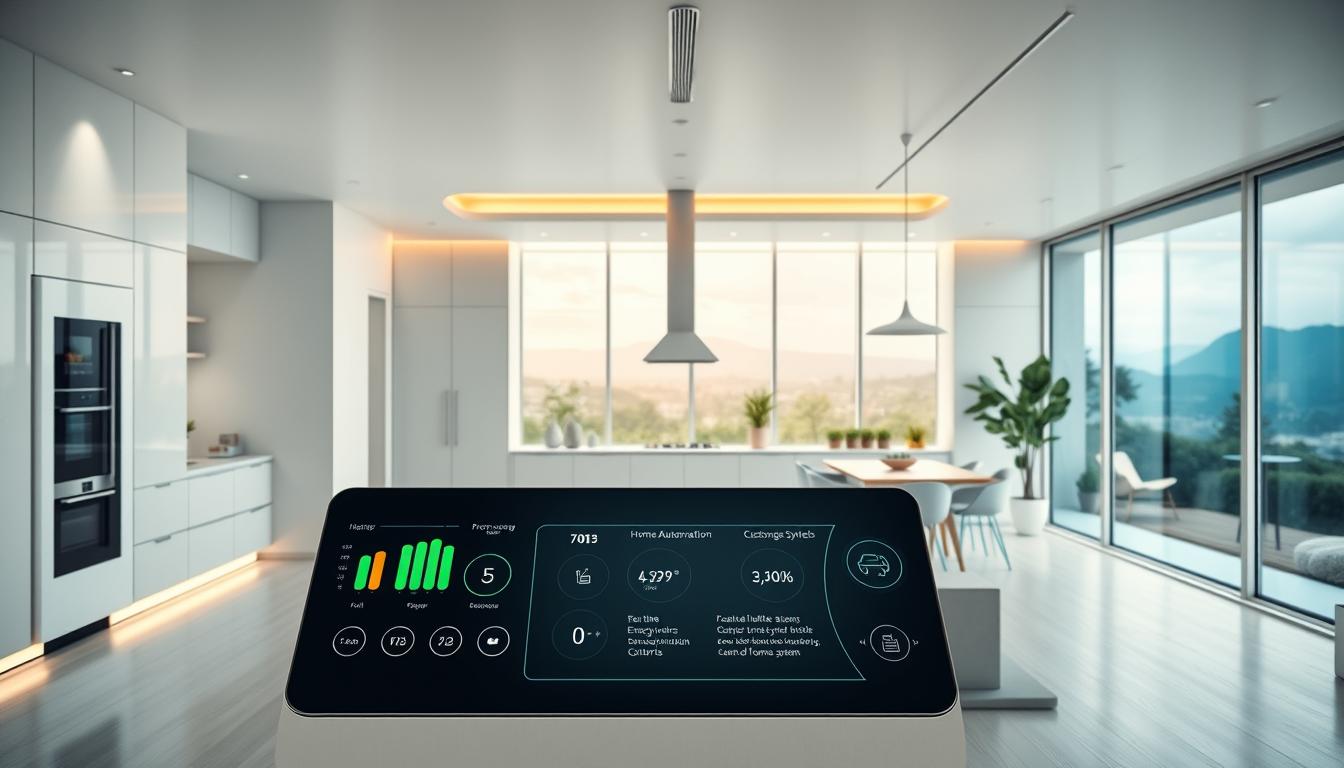
Today’s smart home technology presents significant opportunities for a greener lifestyle. These systems do more than control our homes. They reduce energy waste and make our homes work more efficiently.
Energy Management Systems
Energy management systems are at the forefront of home sustainability. They let me watch and adjust my home’s energy use as it happens. I can see how much energy my appliances use and change my habits to save more.
- Real-time energy monitoring.
- Automatic power optimization.
- Detailed consumption reports.
- Integration with renewable energy sources.
Smart Thermostats: The Heart of Efficient Climate Control
Smart thermostats have changed how we control our home’s temperature. They learn what we like and adjust the temperature to save energy. This makes our homes more comfortable and energy-efficient.
| Feature | Benefit |
|---|---|
| Machine Learning | Adapts to personal temperature preferences. |
| Remote Control | Adjust settings from the smartphone. |
| Energy Reports | Track and reduce energy consumption. |
Using these innovative technologies has significantly reduced my home’s carbon footprint. I also get more comfort and convenience. The future of living sustainably is here, and it’s smarter than ever.
Designing a Sustainable Kitchen
Creating an eco-friendly home starts in the kitchen. It’s where we make choices that help our planet. Sustainable kitchen design is more than just aesthetics; it’s about making informed, environmentally friendly choices.
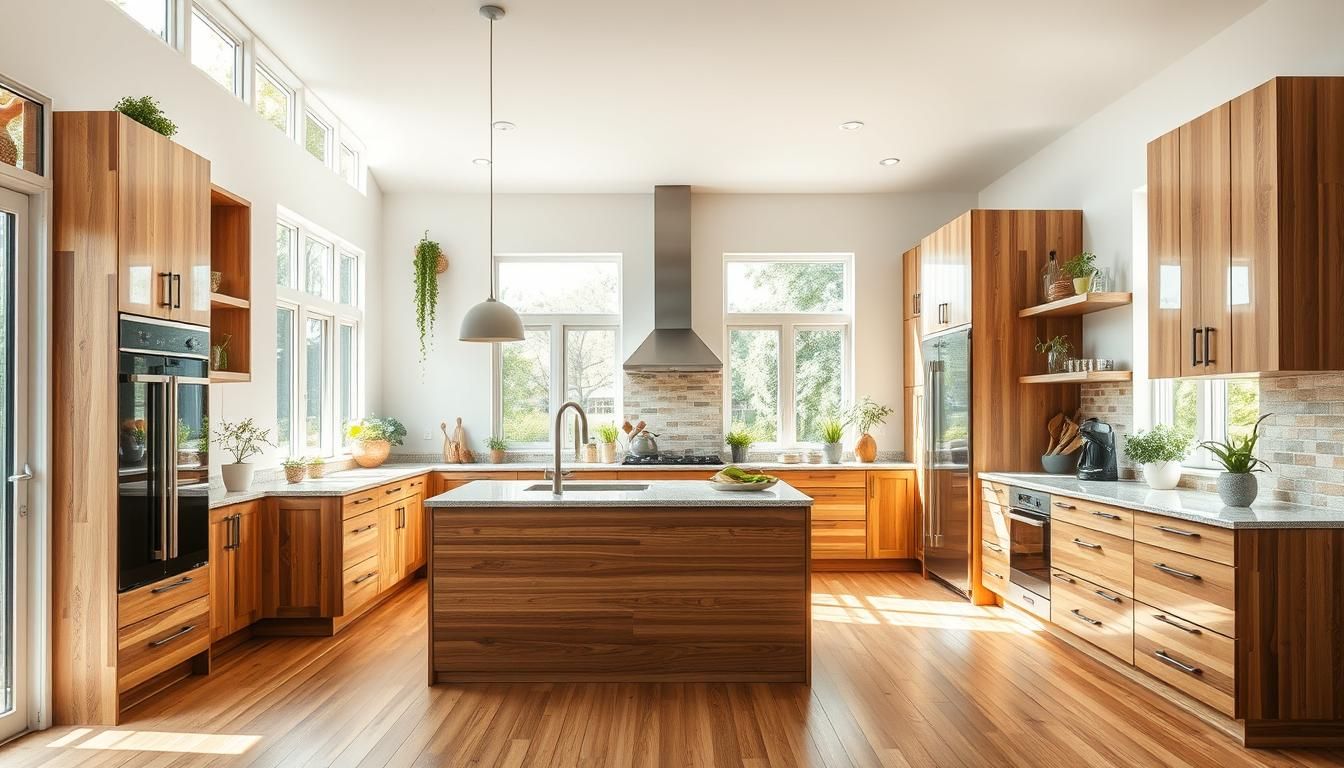
- Energy efficiency
- Material selection
- Waste reduction
Energy-Efficient Appliances: The Smart Choice
Energy Star appliances are a big step towards a greener home. They use less power, reducing energy costs and carbon emissions. When shopping, look for appliances with high energy efficiency ratings.
“Sustainable design isn’t about sacrifice,it’s about smarter living.” – Green Design Experts
Sustainable Material Sourcing
Green design also means choosing the right materials for your kitchen. Consider these options:
- Recycled glass countertops.
- Bamboo cabinetry.
- Reclaimed wood flooring.
- Low-VOC paint finishes.
By making informed choices, you’ll have a kitchen that’s both stunning and environmentally friendly. This shows that green living and style can go hand in hand.
Greener Bathroom Solutions
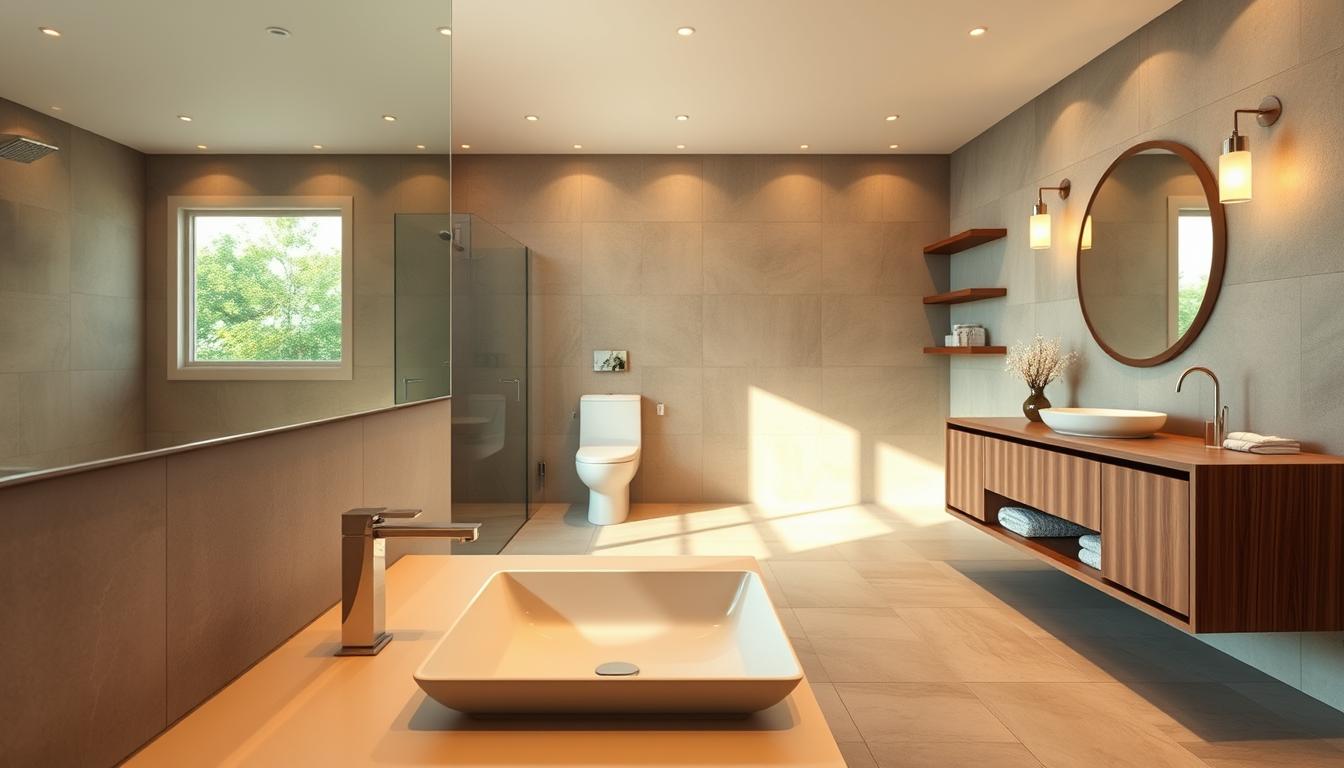
Making your bathroom sustainable is more than a trend. It’s a serious commitment to green building and saving water. I’ve found that even small changes can have a significant impact on the environment and save money.
Revolutionizing Water Conservation
Water-efficient design is about using less water without losing comfort. Today’s bathrooms feature innovative solutions that make our daily routines more environmentally friendly.
Low-Flow Fixtures: The Smart Water Solution
Low-flow fixtures are key in green building. They change how we use water in our bathrooms. Here’s what they offer:
- Up to 60% less water than old fixtures
- Lower water bills every month
- Still great water pressure and performance
Sustainable Bathtub Alternatives
Thinking differently about bathroom design means looking at water-saving options. Walk-in showers with smart tech can replace old bathtubs. They offer:
- Less water use
- A modern look
- Less upkeep
By choosing these green bathroom options, you’re not just updating your space. You’re also helping create a better future.
Landscaping for Sustainability
Creating a sustainable outdoor space is more than just planting flowers; it’s about cultivating a harmonious environment that fosters a sense of well-being. Biophilic design turns your yard into a living ecosystem. It supports local wildlife and connects your home to the natural world. Sustainable landscaping makes your property more climate-resilient and eco-friendly.
Native Plant Landscaping: Nature’s Perfect Solution
Native plants are the heroes of sustainable landscaping. They thrive in local conditions, offering many benefits:
- Minimal water requirements.
- Reduced need for chemical fertilizers.
- Natural habitat for local wildlife.
- Lower maintenance costs.
Choosing plants native to your area creates a climate-resilient yard. My garden is a haven for butterflies, birds, and insects. This is thanks to indigenous plant species.
Rain Gardens: Nature’s Water Management System
Rain gardens are a smart way to manage stormwater and prevent erosion. They capture rainwater runoff, letting it filter through the ground. Native plants with deep roots filter pollutants and help avoid erosion.
- Filtering pollutants from water.
- Preventing soil erosion.
- Replenishing groundwater supplies.
- Creating beautiful landscape features.
I’ve seen how a well-designed rain garden can solve drainage problems. It turns a potential issue into a beautiful, functional landscape feature that supports the environment.
Building vs. Buying a Sustainable Home
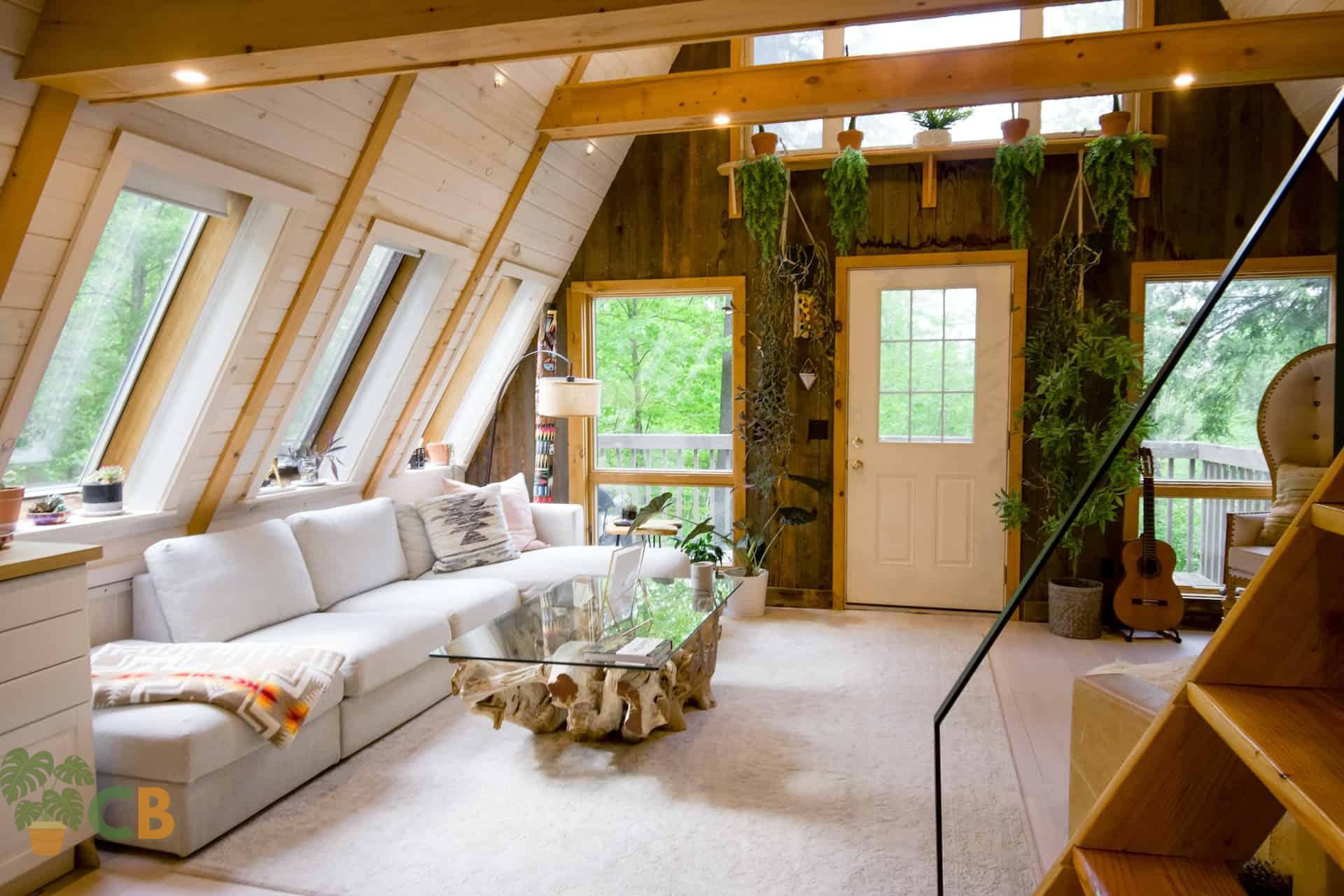
Deciding between building and buying an eco-friendly home can be a tough choice. My work with sustainable designs shows that each path has its benefits for energy-saving homes.
Homeowners have two main choices: build a custom home or buy a pre-made eco-friendly one.
Pros of Building Your Own Sustainable Home
- Complete customization of energy-efficient design.
- Personal control over material selection.
- Ability to incorporate cutting-edge green technologies.
- Tailored to specific environmental conditions.
Benefits of Purchasing a Pre-Built Sustainable Home
- Immediate move-in readiness.
- Potentially lower upfront costs.
- Existing green certifications.
- Proven performance track record.
Your choice depends on personal preferences, budget, and long-term sustainability goals. Whether building or buying, choosing eco-friendly housing demonstrates your care for the planet and commitment to saving energy.
“The greenest building is the one already built” – Carl Elefante
Common Misconceptions About Sustainable Homes
Many people believe that green buildings are too expensive or unappealing in terms of style. These outdated ideas hinder people from adopting sustainable living practices. It could make their homes better and help the planet.
Debunking Cost Myths
One common misconception is that green homes are too expensive. But the savings over time are enormous. Sustainable homes save money in many ways:
- They use less energy
- They need less maintenance
- Utility bills go down
- There might be tax breaks
Breaking Down Design Stereotypes
Some people think green homes look unappealing or are unusual. But modern green design is all about style and sustainability. Today, architects design homes that are both aesthetically pleasing and environmentally friendly.
Practical Considerations
Here are some key points about the cost of sustainable homes:
| Aspect | Traditional Home | Sustainable Home |
|---|---|---|
| Initial Cost | Lower | Slightly Higher |
| Annual Energy Savings | Minimal | 20-30% |
| Long-Term Value | Standard | Significantly Higher |
Knowing these facts helps homeowners make informed choices. A green building is worth it for the savings and for its environmental benefits.
Resources for Sustainable Homeowners
Navigating the world of sustainable homes can be a challenging task. But don’t worry, I’m here to guide you to excellent resources for your green building journey. The National Association of Home Builders (NAHB) has a great collection of tools. They help homeowners and builders learn about living sustainably.
Online communities have revolutionized the landscape for individuals interested in sustainable homes. Sites like Green Building Forum and Reddit’s sustainable living groups are full of networking chances. I’ve found them super helpful in sharing stories, learning new green building tips, and getting advice from pros.
Online Communities and Forums
BuildingGreen.com and the U.S. Green Building Council are top sites for sustainable home info. They have detailed articles, webinars, and expert advice on green building. I recommend checking these sites regularly to stay current with the latest sustainable home technology and designs.
Local Sustainable Living Events
Local events focused on sustainability are excellent opportunities to learn more about green building. Look for workshops, home tours, and seminars in your area. These events offer hands-on learning and provide a chance to meet local experts who are familiar with your region’s specific needs.
Frequently Asked Questions (FAQs): Sustainable Homes
What exactly defines a sustainable home?
Are sustainable homes more expensive to build?
Can I convert my existing home to be more sustainable?
What are the most effective renewable energy options for homes?
How do sustainable homes contribute to fighting climate change?
What sustainable building materials are most recommended?
How can smart home technology improve sustainability?
Are sustainable homes limited in design options?
What water conservation techniques work best in sustainable homes?
How do sustainable homes improve indoor air quality?

Final Thoughts On Sustainable Homes
In embracing sustainable homes, we not only reduce our environmental footprint but also create healthier, more resilient living spaces that stand the test of time.
From cutting-edge energy-efficient designs and renewable energy systems to water-conserving fixtures and eco-friendly materials, these innovations translate into long-term cost savings, improved indoor air quality, and greater self-sufficiency for homeowners.
By prioritizing sustainability, communities can foster green jobs, support local economies, and pave the way for a circular built environment where resources are continually reused and waste is minimized.


Looking ahead, the future of sustainable housing lies in smart integration and community-driven design. Imagine neighborhoods powered by microgrids, where homes communicate to optimize energy usage, and shared green spaces serve as dual-purpose stormwater management systems.
As technology advances, from modular, off-site construction to carbon-capturing building materials, sustainability will become the norm rather than the exception.
By championing these principles today, we can ensure that our homes not only shelter our families but also nurture the planet for future generations.
Further Recommendations:
- Best Indoor Greenhouse
- Bucket Gardening
- Why are my plants drooping?
- How to care for an air plant
- Hydroponic Gardening
- How to Keep Pigeons Off the Balcony?
- Best Patio Furniture Covers
- Patio Pet Games
- Best Kitchen Composters
- Eco-Friendly Homes – Sustainable Living
- Best Soil For Snake Plants
- How to Build a Patio Cover
- Houseplant Happiness! A Guide on How to Clean Plant Leaves Effectively
- 10 Best Indoor Gardening Books
- How to Stop Ants Nesting in Plant Pots
- What Plants Don’t Like Epsom Salt?
- How to Plant Carrot Seeds


Leave a Reply